South Lyon woman explains why she donated 65% of her liver to help a stranger

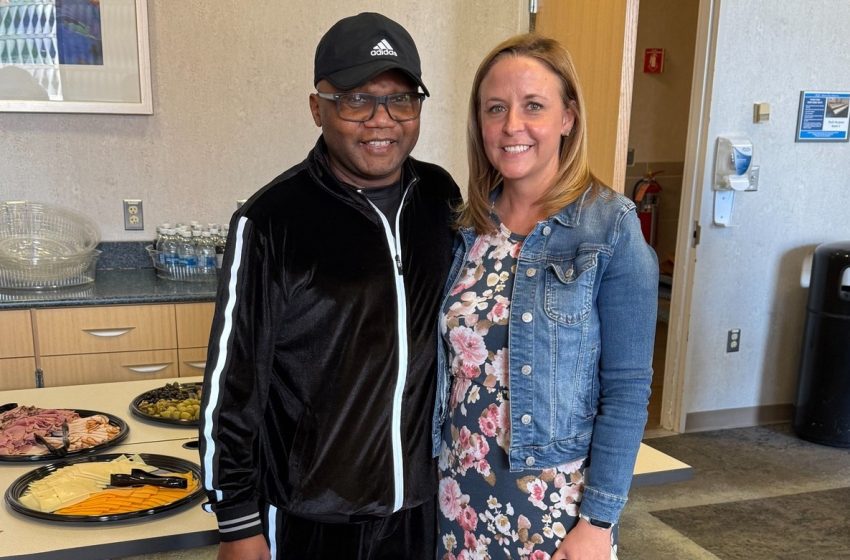
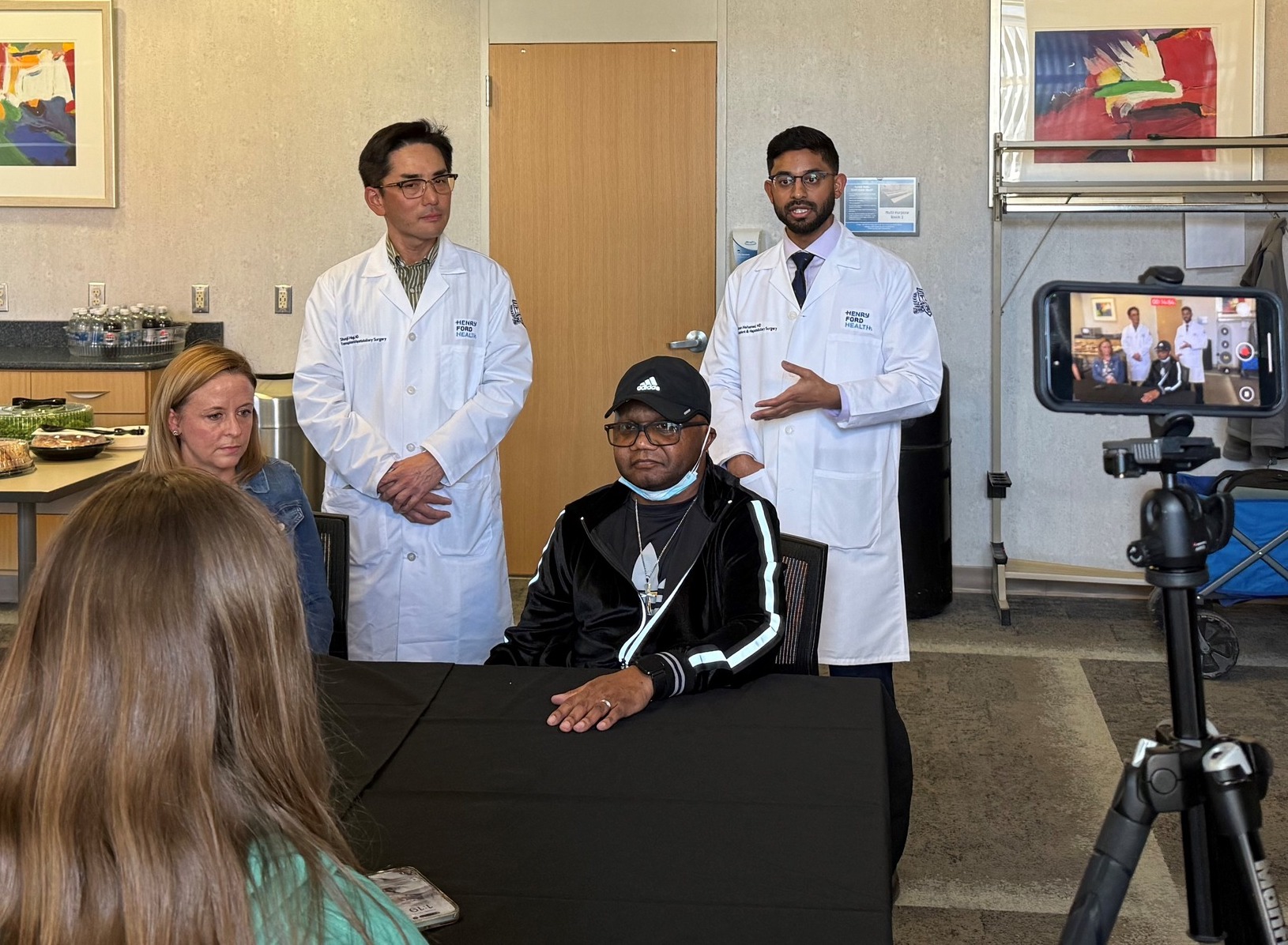
Katie Laurie is pictured with the recipient of part of her liver in April of 2025, the first time they met. PHOTO COURTESY OF HENRY FORD HEALTH
Seven days before Christmas in 2024, South Lyon resident Katie Laurie delivered the most powerful gift one human being can give to another.
The gift of life.
After undergoing months of exhaustive testing by Henry Ford Health doctors — she endured everything from giving 27 vials of blood to a two-hour MRI that helped create a 3-D version of her liver that doctors could practice cutting — Laurie donated 65% of her liver to an, at the time, unknown recipient who had suffered liver-related health issues for several years.
Although the lobe of Laurie’s liver that was surgically removed in 2024 will never grow back, the remaining 35% had rejuvenated to 90% capacity of its pre-surgery status within two weeks of her surgery, and she has experienced no ill effects in the 16 months since.
You, too, can be a heroic donor
Laurie agreed to talk about her incredible donation journey last week — the first week of National Donate Life Month — in hopes that maybe someone might be inspired to follow in her life-saving footsteps.
According to the HenryFord.com, Henry Ford Health doctors performed 175 liver donations in 2025 — 167 coming from deceased donors. The health organization has successfully completed 2,785 liver donations since the inaugural one in 1989 through this past December.
In the United States alone, more than 17,500 patients are on a waiting list to receive a liver transplant. Although more than 6,000 liver transplants are performed every year, at least 1,700 patients die annually while on the waiting list, according to uofmhealth.org.
Although many people would undoubtedly disagree with her, Laurie said she does not consider herself a hero.
“Not at all,” she said. “I thought it was a cool thing to do to help give someone a better life. And everything went so smoothly thanks to the amazing team at Henry Ford.
High praise for Henry Ford Health
“In the months leading up to the surgery, they did a great job of explaining every detail of what would happen, how I would feel immediately after the surgery — they told me I would feel like I had been hit by a bus the day after the surgery, which was accurate (she smiled) — to any possible long-term complications, which I haven’t experienced.”
Laurie’s decision to become a living donor was inspired by a personal tragedy.
In 2009, her premature twins passed away within days of one another.
“A couple weeks after they passed away, I decided to become a blood donor,” she explained. “Every eight weeks since, I’ve donated blood because I know how vital blood donations are. Because I was a regular blood donor, I’d receive alerts about blood donations, that kind of stuff.”
The process begins
In April of 2024, Laurie read a pop-up on Facebook that explained how the living donor process works.
“Before that, I honestly didn’t know (living organ donations) were a thing,” she admitted.
Laurie clicked on the link asking if she would like more information on living donors and within a couple days, someone from Henry Ford Health called her.
“They asked me if they could send me some YouTube-like videos to watch; videos that explained a lot of the details,” she said. “They emailed me more information before asking me if I had a chance to review everything. Next, I talked to members of their transplant team to learn more about how the process worked and then we went from there.
“Honestly, (becoming a living donor) was not something I had put much thought into before I saw the pop-up on Facebook, but it sounded like a good idea.”
Step by step
Later that same month, she scheduled an eight-hour appointment at Henry Ford Health’s downtown Detroit location. During the day-long meeting, she had an EKG, the MRI, X-rays and bloodwork — “Every possible test imaginable,” she added.
“Everything was so well organized,” she said. “They even have you meet with social workers and a psychiatrist. I even did math problems so they could see my train of thought. It was very detailed.”
In August of 2024, Laurie received the news that she had been approved as a living donor, putting her on a donor list that would expire in one year.
In October of 2024, she was notified that a match had been found for her liver.
‘Let’s do this!’
“When they called and told me, I was like, ‘Oh, really?!’ It was kind of surreal. But I told them, ‘Let’s do this!'”
During the weeks leading up to the transplant, Laurie only told a handful of people: her husband John, twin sister Sara and her boss at work because most living donors are off work for up to three months post-surgery (she returned to her job in 12 days).
“I didn’t want anyone finding out and trying to talk me out of it,” she said.
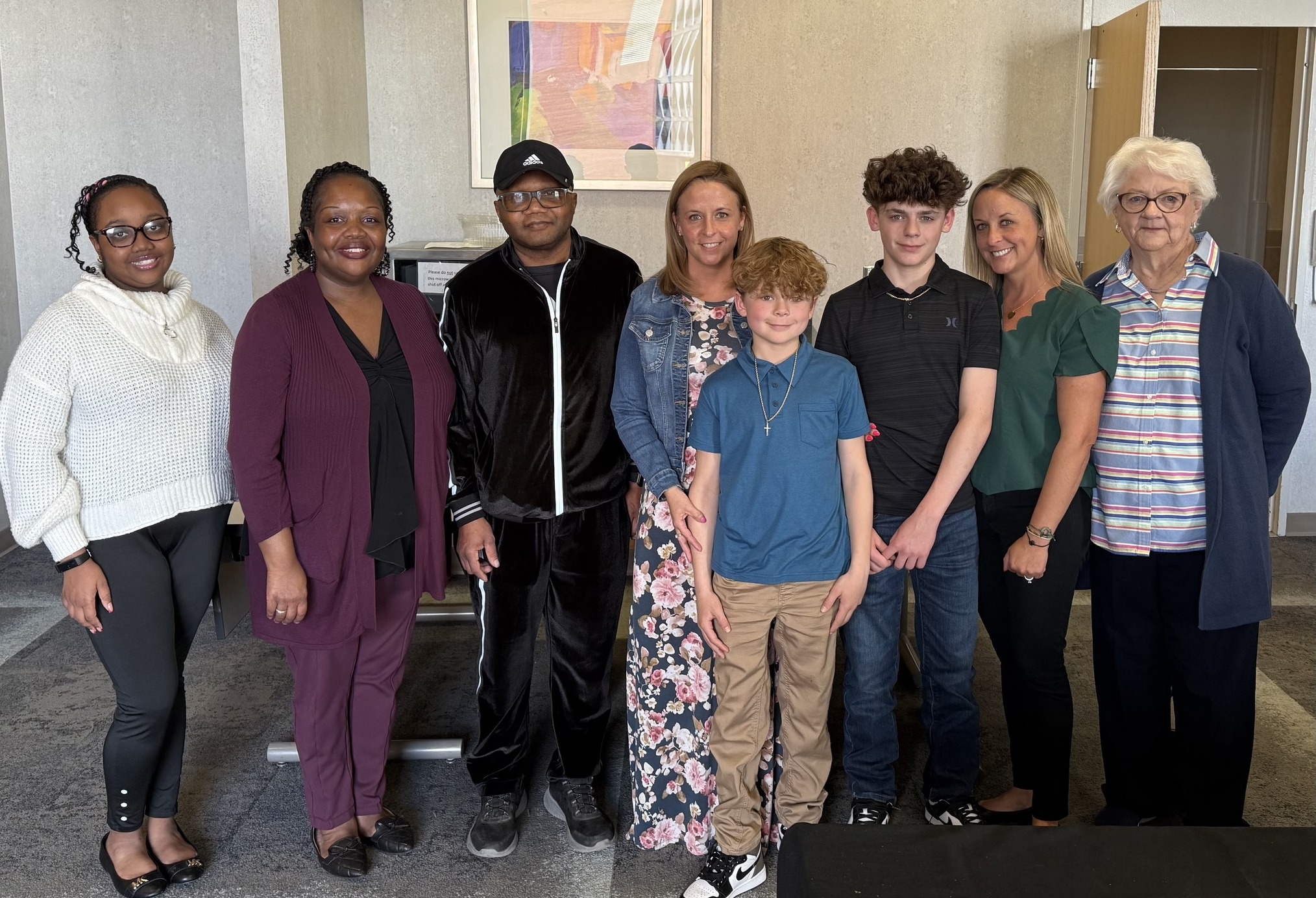
Four months after the surgery, Laurie returned to Henry Ford Hospital along with her two sons, Zane and Luke, sister Sara and her mom Barb to meet the recipient and his family. The meeting was taped by WXYZ Channel 7 with a segment airing that night.
“I was nervous,” she said. “Along with meeting the recipient and his wife — they were so grateful — I got a chance to meet his 16-year-old daughter, who told me, ‘Thanks so much for helping my dad’.”
Laurie admitted she has only one regret in the wake of her amazing organ donation journey.
“I wish I could do it again,” she said.
Ed Wright can be reached at 734-664-4657 or edwright@socialhousenews.com.